
individual counseling sessions
for whom?
I offer counseling focused on domestic violence and abuse, as well as crisis and trauma.
Domestic violence
Whether you’ve already left an abusive relationship or you’re still in it, whether you know you’ve been subjected to some form of violence or are simply wondering if that might be the case - I’m here to help. We always start where you are at and explore your situation: past experiences, the present, and the future. I guide you in understanding and putting into words what you have been and are experiencing, and offer tools to manage this and move forward. My goal is for you to live a free and safe life.
Loved Ones/Family members
Those who are close to people experiencing domestic violence often face significant challenges. Supporting a loved one while managing your own struggles and emotions in this situation can be incredibly difficult. That is why I offer help, support, and guidance to those of you who are close to someone who is currently experiencing or has experienced domestic violence.
Anyone who has a close relationship with someone is considered a family member/loved one: parents, children, siblings, partners, close friends, etc.
Crisis and Trauma
A crisis can be triggered by difficult or overwhelming events and situations. It is experienced as extremely stressful or threatening to your sense of security, identity, or life circumstances.
Trauma occurs as a result of highly stressful experiences that overwhelm your ability to cope with the situation, such as accidents, illness, violence, war, or the loss of a loved one. How a person is affected depends on a number of factors, such as past experiences, mental health, and life circumstances. Crises and trauma often affect you both mentally (your thoughts and feelings) and physically (your body) and can lead to long-term symptoms.
To cope with trauma and crises, support and a sense of safety are essential. That’s where I can help you. Prompt and effective intervention can shorten the recovery period and prevent the development of PTSD.
You are welcome regardless of your age, ethnicity, sexual orientation, gender, and gender identity
This is a safe space 🏳🌈

Where, when, how?
I am available for phone and video calls several days a week.
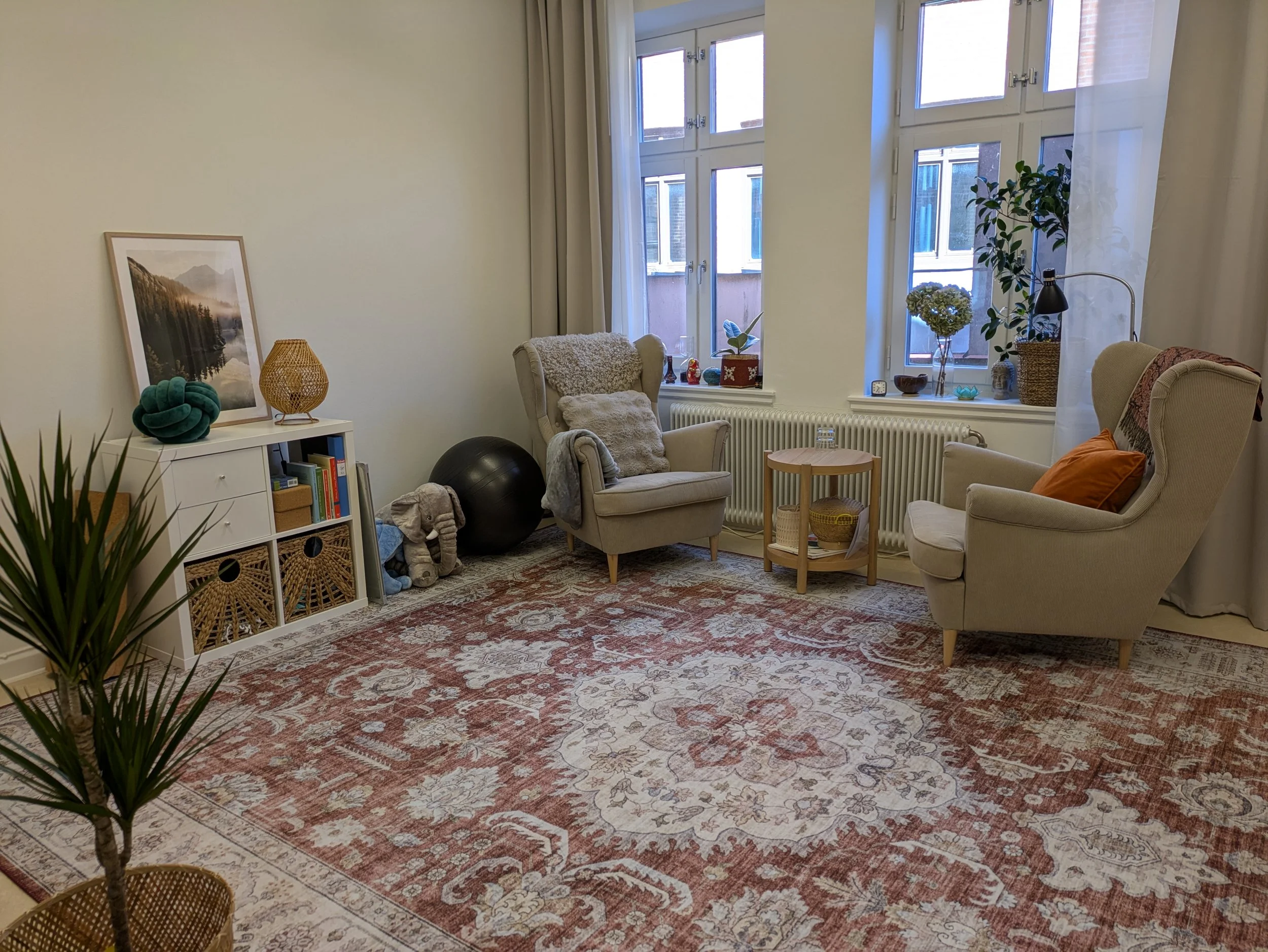
On Wednesdays, we can meet in person in central Malmö at Terapi- & Friskvårdscentrum, Spångatan 20A.
If you prefer to talk while taking a walk in the park, for example, that is also a possibility.
I currently have no waiting times and can schedule appointments almost immediately.
WHY book with ME?
If you’re struggling with questions like: Why can’t I move on? Why don’t I feel better? The relationship ended a long time ago, and I’ve seen a psychologist/gone to therapy - then I am here to help you. Healing from an abusive relationship requires understanding what you’ve been through, your own behavior and that of the abuser, and where to place blame. If you don’t process what happened, it’s hard to break free from it - no matter how much time has passed. Time alone does not heal all wounds.
With me, you’re not undergoing any treatment - simply because you don’t need it. Unless you’ve suffered an illness or injury as a result of the abuse, such as PTSD, you don’t need therapy or treatment, but rather support and understanding as you work through your experiences. I’m here to help you with that.
If you are unsure whether this is right for you - get in touch and we’ll figure it out together. If I think that you need something other than I can offer I will help you figure out where to go. Your well-being is always my priority.
How many sessions are needed?
There is no limit to the number of sessions we can have. It is entirely based on your needs. It’s impossible to say in advance how many sessions will be needed; it depends on you and your situation. For most 5–10 sessions are enough, but some people need more than that. You don’t need to know or decide in advance; we’ll figure it out together and tailor the number and frequency of sessions to your needs.
Methods
I primarily work with Response-Based Practice (RBP) and Trauma-Informed Care (TIC). These are approaches rather than treatment methods.
RBP aims to empower victims of violence by fostering confidence in their abilities and capacity for action, to highlight resistance and responses, and to call violence and abuse what it is.
TIC provides an understanding of how trauma affects individuals. It focuses on creating a calm and safe environment, thereby fostering the right conditions for healing and recovery.
I am bound by confidentiality